


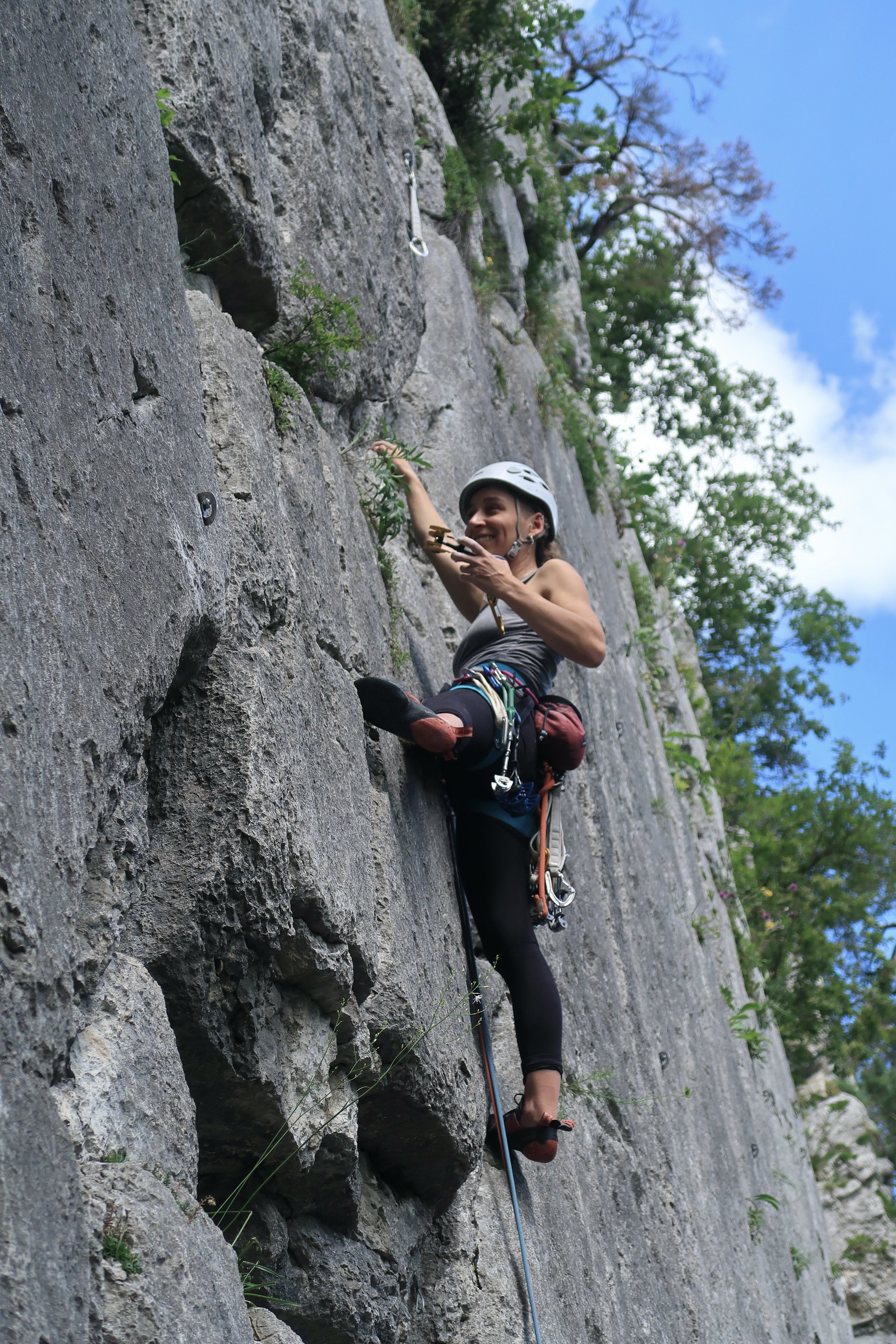
“Discover the world of climbing where safety, professionalism and passion meet! Our climbing instructors are certified by the SBV (Swiss Mountain Guide Association) and guarantee you the highest quality and safety in every course.”

Welcome to the escalando climbing school!
At Escalando, we believe that climbing is more than just a sport - it's a way to build confidence, strength and community. Located in the heart of Zurich, we offer a safe and supportive environment where climbers of all ages and abilities can learn, grow and develop.
Ready to get started?
Book your first course now and discover the fascination of climbing with Escalando!

OUR COURSES & TOURS

MULTIPITCH CLIMBING
CLIMB 7B

LEAD-COURSE INDOOR

SPORTCLIMBING

FALLING & SAFETY TRAINING

MULTP-TOURS

CLEAN CLIMBING

NACHWUCHSTRAINING
First time climbing ?
-
Bouldering:
Indoor bouldering is an exciting form of climbing that takes place indoors on artificial climbing walls - without any ropes or harnesses. No previous experience is necessary, as you can simply hire the necessary equipment in most bouldering halls and get started straight away. Perfect for newcomers who want to gain their first climbing experience! Here are some of the best places to go bouldering.
minimum.ch (Zurich)
kletterzentrum.com (Zurich)
Binzschwach (Zurich)
quadrel.ch (Chur)
bzwei.ch (Basel)
Sport climbing:
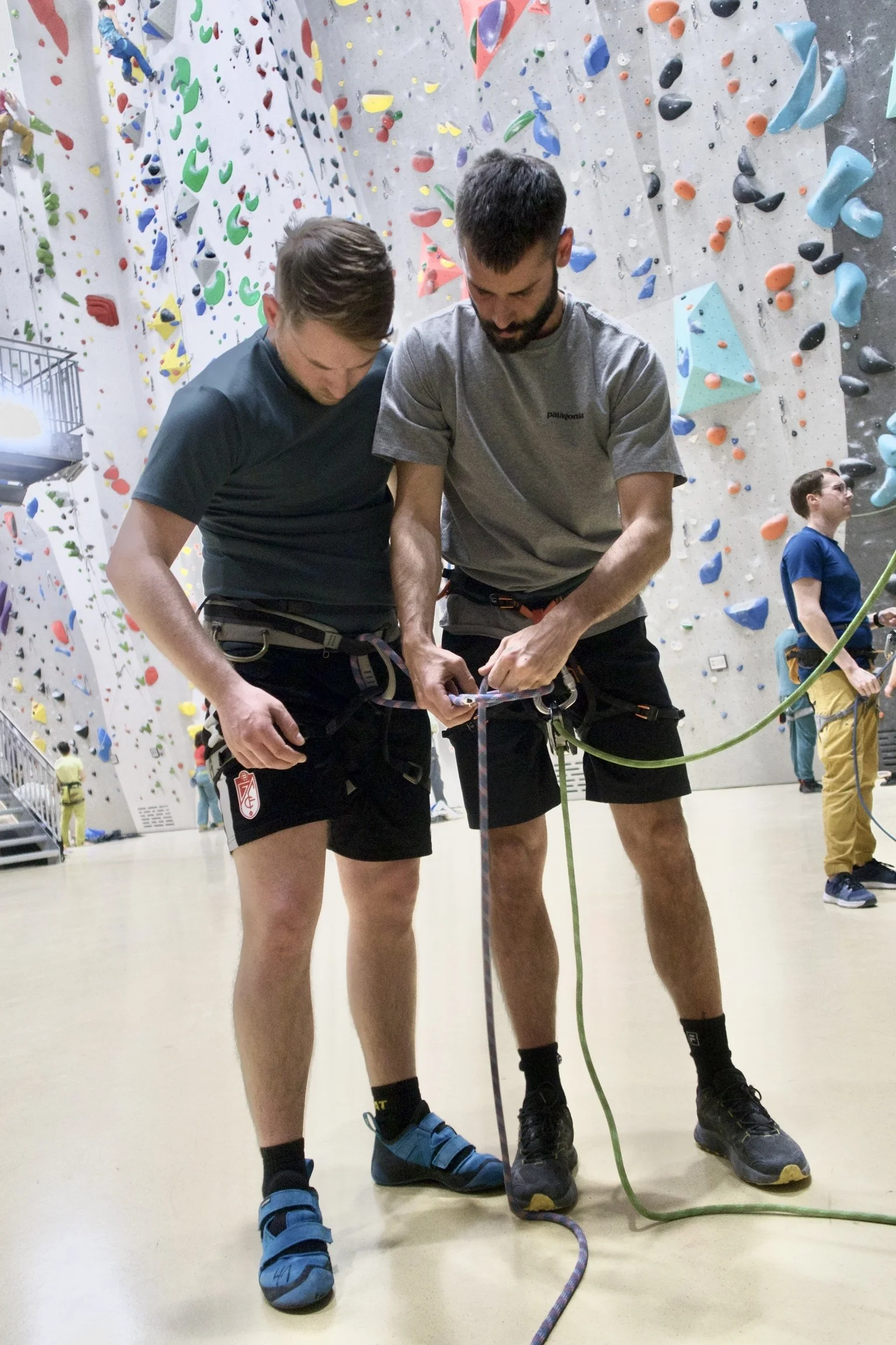
In contrast to bouldering, sport climbing requires basic training or equivalent training to ensure safety. An indoor lead course is the ideal introduction to this fascinating sport. Here you will not only learn the basic techniques, but also how to keep yourself and others safe - perfect for anyone who wants to aim high!
-
-
Why choose us?
Experienced instructors: Our certified and experienced instructors are passionate about teaching and committed to your success.
Personalized approach: Thanks to small group sizes and individual coaching, we guarantee that you get the attention you need.
Fun & safety: Safety is our top priority - but we never forget that climbing should be fun and exciting!
Become part of our community
At Escalando Climbing School, we are more than just a climbing school - we are a community of passionate climbers who support and inspire each other. Whether you want to try something new, improve your skills or meet other climbers: We are here for you and will help you reach new heights.
VIVA LA ROCA !

Upcoming events/workshops.
Event: Climbing meeting Grow together, climb better
Would you like to improve your climbing technique and meet new climbing partners at the same time? Our climbing meeting is the ideal place to climb together in a relaxed atmosphere, exchange experiences and get valuable tips.
Workshop: Falling & belaying
Falling is part of climbing - but how do you react correctly to fall safely or secure your partner in the best possible way? In our workshop, you will learn how to deal with the fear of falling and master the basics of safe falling and belaying.
Workshop: Climb 7b
Specific training for climbers who want to improve their level; in addition to the basic principles of training, we will above all teach you the right mental attitude.
Our clients say:
-
![]()
Indoor lead climbing course
"I enjoyed very much the course. I was scared and afraid of heights, but they immediately made me comfortable in a safe environment. They have been very supportive with me and my friend. I am happy now to climb independently with my partner and friends"
-
![]()
Outdoor sport climbing
“Thanks for that fun day on the rocks! Was all so well organized, great team! I learned a lot! Looking forward for the climbing season:)”
-
![]()
Multi-pitch basic course
"Ubaldo and Alessandro drove us to Jura. We liked very much the place they chose: comfortable for sleeping with the camper, and very close approach to the crag. We loved their teaching method: theory on the ground, practice and climbing on the wall. I now feel safe and motivated to climb multipitch, thanks!"
-
![]()
Climb 7b
"I am so glad I found a course to climb 7b. Many gyms offer only until 7a, but I wanted to go further. It was exhausting, but very useful. I improved my climbing skills, and I can now program my own training. 8a, I am coming!"
-
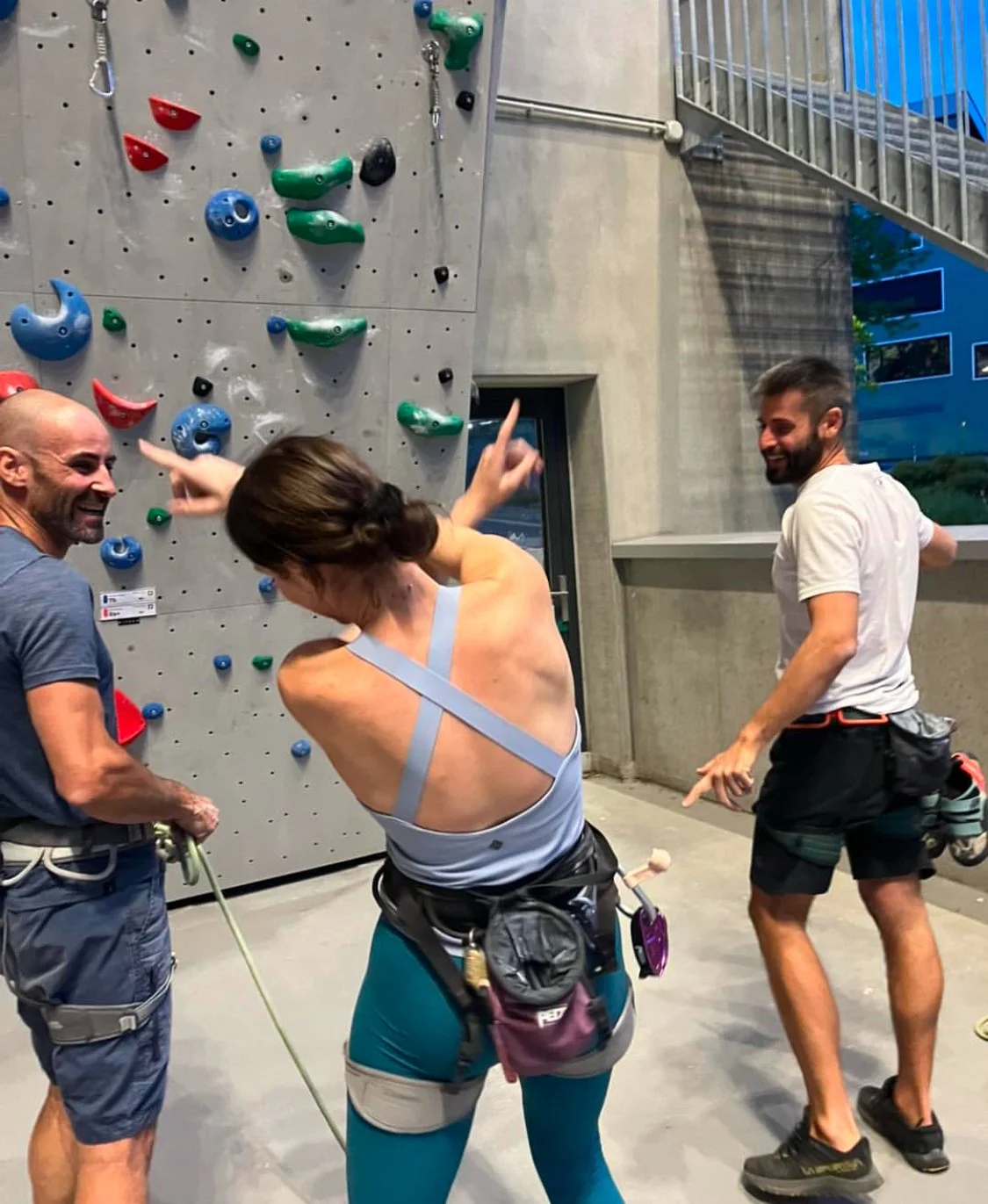
![Drei Personen beim Klettern in einer Kletterhalle, zwei Männer und eine Frau, die auf einer Kletterwand hängen, Spaß haben und sich unterhalten.]()
Klettertreff/Climbing meeting
“I really enjoyed the Klettertreff/climbing meet up organised by Ubaldo and Alessandro. They were super kind and gave great tips, and everyone in the group was friendly and welcoming. Highly recommended!“
Follow us on Social Media



FAQ
-
Climbing instructors in Switzerland possess a wide range of technical, pedagogical and safety-related skills to deliver high-quality and safe climbing courses. Their qualifications depend on whether they are certified by recognized institutions such as the Swiss Mountain Guide Association (SBV) or other accredited climbing-instructor training programs.
Below are the key competencies that define professional climbing instructors in Switzerland.1. Technical Skills
Climbing Techniques
Mastery of beginner to advanced techniques across various climbing disciplines, including sport climbing, multipitch climbing and clean climbing.
Belaying Skills
Ability to apply and teach safe belaying techniques using different devices and in diverse indoor and outdoor situations.
Equipment Knowledge
Extensive understanding of climbing gear—ropes, belay devices, carabiners and more—and how to use and maintain them safely.
Route Assessment
Evaluating climbing routes in terms of difficulty, safety, protection, rock quality and suitability for different participant levels.
2. Pedagogical Skills
Teaching & Methodology
Explaining climbing techniques and safety principles clearly, adapting instruction to the level, learning style and pace of each participant.
Motivation & Encouragement
Supporting climbers in overcoming fear, building confidence and progressing step by step.
Individual Coaching
Addressing different experience levels, fitness capacities and personal goals while creating an inclusive and respectful learning environment.
3. Safety-Related Skills
Risk Assessment
Identifying potential hazards at the crag, in indoor climbing gyms and in alpine environments.
Emergency Management
Knowledge of first aid, rescue techniques and appropriate behaviour in critical situations.
Risk Management & Planning
Preparing courses and tours with careful consideration of weather, route conditions, group dynamics and safety protocols.
4. Personal Skills
Physical Fitness & Technique
Demonstrating strong climbing ability and acting as a role model in challenging situations.
Communication
Clear, respectful and confident communication to build trust and ensure safety during climbing activities.
Professionalism & Responsibility
Maintaining high ethical standards, safety awareness and teaching quality at all times.
5. Certification & Continuing Education
SBV Certification (Swiss Mountain Guide Association)
Climbing instructors certified by the SBV undergo comprehensive, practice-oriented training recognized internationally.
Continuous Education
Many instructors pursue additional training in new techniques, equipment knowledge, coaching methods or psychology (e.g., working with fear of heights).
Specializations
Some climbing instructors specialize further in areas such as children’s climbing, adaptive climbing courses or specific climbing disciplines.
⭐ Conclusion: High Standards, Maximum Safety
Thanks to these skills, climbing instructors in Switzerland ensure that climbers of all levels—from beginners to advanced athletes—can enjoy the sport safely while experiencing continuous learning, confidence building and true joy in movement.
-
Switzerland is a paradise for climbers and offers an impressive variety of climbing areas.
There are more than 1,200 climbing crags across the country, covering a wide range of difficulty levels, landscapes and climbing styles.Below is an overview of the main climbing regions in Switzerland:
Climbing Regions in Switzerland
1. Alpine Regions (Valais, Bernese Oberland, Graubünden)
These areas offer many high-alpine climbing spots with spectacular multipitch routes and traditional climbing.
Well-known areas: Grimselpass, Salbit (Plaisir routes near Salbit hut), Eldorado.
2. Central Switzerland (Uri, Nidwalden, Lucerne)
A region rich in sport climbing walls and multipitch routes, suitable for all levels.
Popular crags: Engelberg, Schächental.
3. Ticino
Famous for its granite climbing and world-class bouldering.
Well-known areas: Cresciano, Chironico, Ponte Brolla.
4. Jura (Northwestern Switzerland)
Compact limestone cliffs perfect for sport climbing.
Popular crags: Falkenflue, Klus-Balsthal, Creux du Van.
5. Lake Geneva Region & Vaud
Beautiful climbing areas with panoramic views and well-bolted sport climbing routes.
Popular spots: St. Triphon, Pont de Nant.
6. Eastern Switzerland (St. Gallen, Appenzell)
A mix of scenic routes and excellent bouldering areas.
Well-known regions: Alpstein, Klettergarten Wildhaus.
Types of Climbing in Switzerland
Sport Climbing
More than 10,000 routes, ranging from beginner-friendly to extremely challenging lines.
Multipitch Climbing
From easy Plaisir routes to demanding alpine classics high in the Alps.
Bouldering
Hundreds of bouldering areas, especially in Ticino and the Jura.
Trad Climbing & Clean Climbing
Mostly found in alpine regions such as the Grimsel area or Salbit.
⭐ Conclusion: One of Europe’s Best Climbing Destinations
Switzerland truly has something for every type of climber — whether you’re a beginner, a recreational climber or an expert looking for technical alpine routes.
Its diversity and quality make it one of the top climbing destinations in Europe. -
Climbing can be potentially dangerous, but with proper technique, equipment, training and awareness, it is considered a relatively safe sport.
The risk of accidents depends strongly on the type of climbing, the terrain and the behaviour of the climbers.
Here is an overview of the main risks — and how they can be minimized.Potential Risks in Climbing
1. Falls
Risk: Falls from height, uncontrolled movements or incorrect belaying can cause injuries.
How to minimize: Regular fall practice, correct belaying technique and reliable equipment significantly reduce the risk.2. Equipment Failure
Risk: Damaged or incorrectly used equipment — ropes, carabiners or belay devices — can fail.
How to minimize: Regular equipment checks and following manufacturer guidelines are essential.3. Rockfall and Environmental Hazards
Risk: In alpine terrain, falling rocks or sudden weather changes can be dangerous.
How to minimize: Wearing a helmet, checking weather forecasts and assessing alpine risks.4. Human Error
Risk: Incorrect knot tying, communication mistakes or lack of attention while belaying are among the most common causes of accidents.
How to minimize: Professional instruction, clear communication and partner checks (“buddy check”).5. Overexertion
Risk: Physical or mental overload — such as fear of heights or insufficient strength — can lead to mistakes.
How to minimize: Choose routes appropriate for your level and progress gradually.Differences Between Climbing Styles
Sport Climbing (Indoor/Outdoor)
Generally safe due to fixed protection, controlled environments and reliable bolting.
Multipitch & Alpine Climbing
Higher risk due to exposure, long routes, complex terrain and potentially unreliable protection.
Bouldering
Lower fall height, but injuries can occur from hard landings or awkward falls.
Statistics and Comparison With Other Sports
Climbing has a lower injury rate than sports like football, skiing or mountain biking.
Most climbing accidents are caused by human error, not objective hazards.
⭐ Conclusion: Climbing Is Safe With the Right Knowledge and Awareness
Climbing involves risks, but with proper preparation, instruction and mindful behaviour, it can be practiced safely.
Handling safety equipment correctly and understanding your own limits are key factors.Many climbers value the sport precisely because it combines physical activity, mental focus and the beauty of being in nature — and with the right precautions, it becomes a safe and rewarding adventure.
-
Climbing your first 7a is an exciting milestone. It requires a combination of solid technique, strength, endurance and mental confidence.
How quickly you reach this level depends on your current ability, your training approach and how consistently you climb.Below is a step-by-step guide to help you progress toward your first 7a.
1. Understand Your Starting Point
Current climbing level
If you are already climbing 6a or 6b, you have a solid foundation to begin working towards 7a.
Technique & experience
Ask yourself:
How comfortable are you with movement patterns?
Can you climb dynamically?
Do you manage overhangs efficiently?
How well do you rest and shake out on the wall?
2. Optimize Your Training
Strength training
Finger strength and core tension are crucial for 7a climbing. Useful exercises include:
Hangboard / fingerboard sessions
Core workouts (planks, L-sits, hollow body)
Endurance
Train longer sequences and power endurance with:
“Pyramids” (hard moves followed by easier ones)
Linked route circuits
Recovering on the wall instead of coming down
Technique improvement
Focus on:
precise footwork
efficient body positioning
using less brute force and more technique
reading sequences before climbing
3. Build Mental Strength
Progress mindset
Celebrate small improvements — every new move is a step closer to your goal.
Fall confidence
Controlled fall practice and trusting your belayer are essential for pushing to your limit.
4. Choose the Right Routes
Not all 7as are the same
Some are power-dependent, others highly technical. Pick a route that matches your strengths.
Projecting
Identify a route you like, learn each sequence, refine the movement and link sections together.
Projecting accelerates progress.5. Consistency + Patience = Progress
A realistic training frequency is:
2–4 climbing days per week, depending on recovery and intensity.Typical timeframes
A motivated beginner can reach 7a in 1–3 years with regular training.
A climber already at 6b/6c can achieve 7a in a few months.
Common Challenges — and How to Overcome Them
❗ Lack of finger strength
Train regularly on a hangboard with small edges or crimps.
❗ Fear of falling
Practice falls in a safe, controlled environment to build confidence.
❗ Plateaus in training
Change your routine, try new styles, learn new techniques or climb with people who inspire you.
Final Thoughts
With a clear strategy, consistent training and a love for the process, your first 7a is absolutely within reach.
Stay patient, enjoy the journey — and celebrate every step along the way.
